Showing posts with label rockfish. Show all posts

Saturday, June 7, 2014

Ocean City Md Striped Bass Fishing

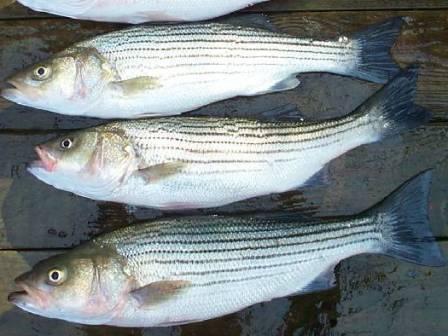
striped bass rockfish

The striped bass, also known as striper, or rockfish is one of the most popular saltwater fish caught at Ocean City, Md. Unlike most saltwater fish species, striped bass are caught during all four seasons; spring, summer, fall, and winter.

Productive areas for catching stripers around Ocean City include the north jetty, south jetty, Rt 50 bridge, Rt. 90 bridge, Verrazano Bridge, coastal bays, and beaches along Ocean City and Assateague Island.

Casting lures is a popular technique for catching striped bass. Popular lures for catching stripers include bucktail jigs, jigs with soft plastic bodies, metal jigs, crankbaits, topwater plugs, gotcha style plugs, spoons, and others.

Striped bass are also caught using a variety of live and cut baits. Around bridges and jetties, live eels and spot are popular. For surf fishing, anglers employ cut baits including bloodworms, menhaden, mullet, spot, soft crab, sea clams, and other baits.

Although fishing for these heavyweight gamefish can be very specialized, anglers occasionally catch striped bass while flounder fishing.

Striped bass make excellent table fare. Fish kept for the table should be kept cold.

Stripers can be cleaned using either of three techniques;

scale first and fillet, leaving skin on;
remove the skin first by peeling off, then fillet;
or fillet first and then cut skin from fillet.

Thursday, December 20, 2012

Ocean City Striped Bass Fishing Violations

In December, Maryland Natural Resource Police charged several anglers with striped bass violations in Ocean City, MD.

A number of incidents involved citations for possessing and transporting striped bass from the Exclusive Economic Zone (EEZ). The EEZ waters are defined as federal waters extending form 3-200 miles offshore.

Friday, January 21, 2011

How To Buy and Cook Maryland Rockfish

Striped bass, also known as rockfish, is the official state fish of Maryland.  It is known for its firm texture and delectable flavor.

According to Maryland Department of Agriculture, a three ounce cooked portion of Maryland rockfish contains 105 calories, 2.5 grams of fat, vitamins, minerals, .8 grams of omega-3 fatty acids and zero carbohydrates.  Omega-3 fatty acids are help in lowering cholesterol and have many other important benefits for eyes, skin and even mental health.

Rockfish may be poached in a seasoned broth and used in salads, soups, and even fish cakes.  A favorite is to simply brush the fish with a small amount of olive oil, sprinkle with salt and pepper then bake at 450˚F for 10 minutes per inch of thickness of fish. This traditional Maryland fish is also delicious stuffed with crab imperial or an oyster dressing for special occasions or cut up into strips and fried for a tasty treat.

Look for the following when purchasing fresh rockfish:

Fresh fish should have a mild sea breeze aroma.

Whole fish should have bright, clear and shiny eyes.

Scales should be shiny and cling tightly to the skin.

Look for bright pink or red gills.

Steaks and fillets should be moist with firm and shiny flesh.

The flesh should spring back when pressed.

Look for Maryland rockfish at your favorite restaurant or retail market.  For a free striped bass recipe brochure call the Maryland Department of Agriculture at (410) 841-5972 or toll-free in Maryland 888-841-5828 or visit our website at www.marylandseafood.org.

ROCKFISH WITH LEMON AND CAPER DRESSING

MARYLAND ROCKFISH:

4 fillets, 6 to 8 ounces each, about 1 inch thick
1/3 cup extra virgin olive oil

DRESSING:

2 medium lemons (or 1 tablespoon lemon juice)
4 tablespoons extra virgin olive oil, divided
1 tablespoon capers, drained
1 tablespoon finely chopped fresh chives
1/4 teaspoon Kosher salt
1/4 teaspoon freshly ground black pepper


SEASONINGS:

1 teaspoon onion powder
1 teaspoon finely chopped fresh dill
1/2 teaspoon Kosher salt
1/2 teaspoon freshly ground black pepper

Prepare the dressing: Cut a 1/2-inch slice off both ends of each lemon.  Cut each lemon in half lengthwise.  Lightly brush or spray the cut sides of the lemons with 1 teaspoon of the oil.  In a non-stick skillet, sauté the lemons on high heat until nicely browned, 4 to 6 minutes, turning once.  Remove the lemons from the pan and cool.  Squeeze the lemons through a sieve into a small bowl.  Discard the rinds and seeds.  You should have about 1 tablespoon of lemon juice.  Add the capers, then whisk in the 3 tablespoons oil to form a dressing.  Whisk in the rest of the dressing ingredients.

In a small bowl, mix the seasonings together.  Generously brush or spray the rockfish on both sides with remaining oil and seasonings.  Place fillets, skin side down on clean, slightly oiled pan.  Bake at 450˚F until the rockfish just begins to flake when you poke it with the tip of a knife about 10 minutes.  Whisk the dressing one last time.  Serve the fish with the dressing poured over the top.  Serves four.

source: Maryland Department of Agriculture

Saturday, March 13, 2010

New Pre-Season Striped Bass Catch & Release Rules Begin on March 22

The Maryland Department of Natural Resources (DNR) Fisheries Service will implement new regulations March 22 addressing pre-season striped bass fishing. These restrictions will be in effect until the April 17 start of the spring trophy season. The regulations are being introduced to address a serious concern over sub-lethal impacts on pre-spawn female striped bass, that are moving up the Chesapeake Bay to their spawning grounds in March and April.

“It is never easy to restrict the access and opportunity to a resource, but let’s not forget how far we have come from the striped bass moratorium of 20 years ago,” said DNR Fisheries Director Tom O’Connell. “We are fortunate that all sectors of our fishing community benefit today from the sacrifices of past management efforts. The latest stock assessment raises some concerns that require us to pause and evaluate how our actions may be impacting the long-term sustainability of this resource. If we remain vigilant and prudent in our management of this resource, we will ensure that our premier striped bass fishery will remain available for us and future generations to enjoy.”

Preseason recreational fishing has increased since 2002 causing concern among fisheries biologists and managers over the potential effect of the stress of being caught, handled, and released.

The restrictions apply in all open catch and release areas. The catch and release fishing areas include the Chesapeake Bay from the Brewerton Channel to the Virginia line including Tangier and Pocomoke Sounds. Spawning rivers and the Upper Bay spawning area are off limits until June 1 to striped bass fishing.

The Preseason Regulations:

 - Stinger (trailing) hooks are prohibited.

 - Barbless hooks are required when trolling. Simply pinch the barb down to facilitate the careful release of your fish.

 - Non-offset circle hooks or J hooks with a gap of less than a half-inch are required when using natural bait.

 - No more than 6 lines may be employed while trolling regardless of the number of anglers on board.

The spring trophy season runs from April 17 through midnight on May 15 with a creel of one fish and size limit of 28 inches or longer. The open fishing area includes the Chesapeake Bay from the Brewerton Channel to the Virginia line including the Tangier and Pocomoke Sounds. From May 16 through December 15, the creel limit is two with a minimum size of 18 inches. However, only one of those two fish may be longer than 28 inches.

To view a chart of open catch and release and spring trophy season areas go to www.dnr.state.md.us/fisheries/regulations/sbrecseasons/sbregmap022.

Monday, March 8, 2010

27th Annual MSSA Spring Rockfish Tournament

The Maryland Saltwater Sportfishermen’s Association (MSSA) has announced its 27th Annual Spring Tournament, "Championship on the Chesapeake", April 30th - May 2nd, 2010. The event is said to be the largest spring rockfish tournament in the country.

"Trophy Season" is marked by the first weekend in May as the coastal stock of striped bass make their way through the Chesapeake Bay to the Atlantic after spawning in our rivers. With the "Trophy Season" just starting, this tournament is guaranteed to provide three days of fun and excitement on the Bay, as over 650 boats and nearly 4,000 anglers get an opportunity to catch one of these magnificent beauties. The winning fish could be worth $100,000!

All cash and merchandise prizes are for rockfish. The heaviest rockfish on the scales shall be declared the winner of the main tournament. In addition to all main tournament prizes there will be several "Tournament within Tournament" (TWTs) to compete in.

It is important to note that participants should enter in all of the "Tournament within Tournament" (TWTs) to have a chance at the huge cash prize for heaviest rockfish. While this may require more money to enter, this will give anglers a shot at a huge sum of money.

The Spring Tournament is an amateur tournament; however, there is a Professional Division with separate cash prizes and awards. All monies collected from the "Professional Division’s" will be deposited in a special account for their cash prizes. The amateur participants will not have to compete against the Pros.

As the MSSA continues to fight for better fishing in the Bay and elsewhere, the organization asks that participants practice conservation and take part in the "Catch and Release Division" as well. The association asks anglers to release sub-legal rockfish and fish over the daily creel as carefully as possible.

This event is the principle source of revenue for the MSSA. The proceeds from the tournament enable the MSSA to conduct many activities and enhance recreational fishing opportunities for Maryland. The MSSA has been recognized as the "Official Voice of Maryland Recreational Anglers."

For more information, visit: http://www.mssa.net/championship.html

Saturday, February 20, 2010

Maryland Chesapeake Bay Seafood


The Chesapeake Bay is famous for its seafood, especially oysters, blue crabs, hard clams, soft shelled clams and a fish, especially the rockfish or striped bass. Other Chesapeake Bay fish include gray trout, speckled trout, croakers, spot, flounder, sea bass, white perch, yellow perch.